
 Tiếng Việt
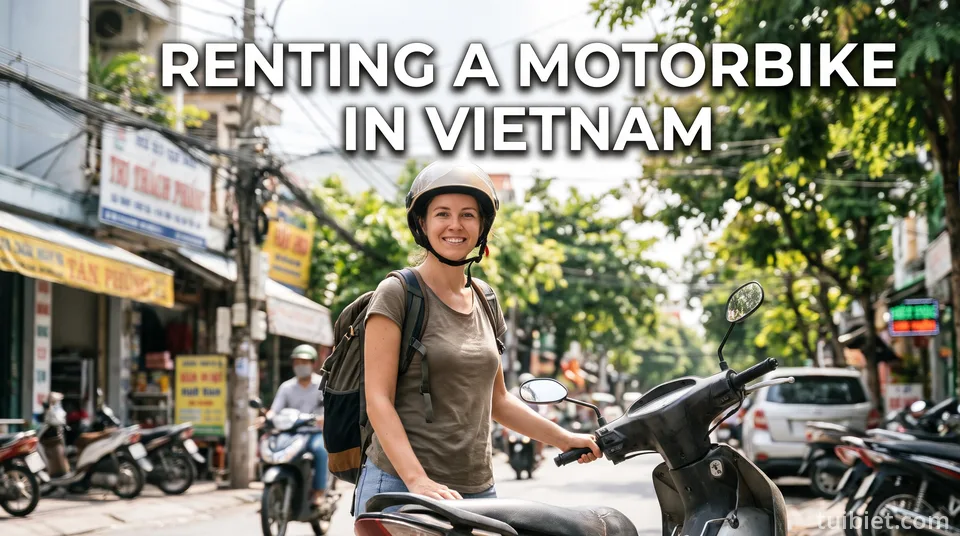
Nothing opens up Vietnam quite like a motorbike. A scooter carries you down a coastal road at sunset, through rice fields at harvest time, and up a mountain pass that no bus window can match. It is cheap, it is flexible, and for many visitors it becomes the best part of the trip. But renting a motorbike in Vietnam is also where visitors most often run into trouble — not because riding here is impossibly hard, but because the rules are different from home, the paperwork matters more than the rental shop admits, and a small mistake can turn into a large fine or a refused insurance claim. This guide explains the licence rules, the real prices, the documents to prepare, and the safety and scam checks to run before you ride.
Do you need a licence to ride a motorbike in Vietnam?
Yes, for anything with an engine over 50cc. Vietnam recognises an International Driving Permit (IDP) only when it was issued under the 1968 Vienna Convention on Road Traffic and is carried together with your home driving licence. The IDP is a translation of your licence, not a licence on its own: without the original home licence beside it, it means nothing. It must also show a motorcycle category. An IDP stamped for cars only does not let you ride a scooter, and a permit that has expired — or a home licence that has expired — is no good either. A 1968 IDP is valid for up to three years, and never longer than the home licence it translates.
The detail that catches most visitors is which convention their country uses. Vietnam is a party to the 1968 Vienna Convention, but not to the older 1949 Geneva Convention, so a 1949 IDP is not recognised here. That matters because the United States, Canada, Australia, New Zealand, Japan, Ireland and India issue only the 1949 kind. If your licence is from one of those countries, there is no IDP you can obtain at home that Vietnam accepts for riding a motorbike over 50cc. The United Kingdom, by contrast, switched to the 1968 format in 2019, so a British IDP with a motorcycle category is accepted. Travellers from the US should also read the warning on the US Embassy’s driving page, which states that foreign licences are not valid in Vietnam even with an IDP — that page is written for Americans, whose IDPs are the 1949 kind, and it is a reminder to check your own country’s position rather than assuming any IDP will do.
Engine size decides which category you need. Since 1 January 2025, under the Law on Road Traffic Order and Safety (No. 36/2024/QH15), Vietnam issues new licences in three motorcycle classes: A1 for two-wheelers up to 125cc (or electric bikes up to 11 kW), A for anything above 125cc, and B1 for three-wheelers. Older guides still describe A1 as covering bikes under 175cc and A2 as the big-bike class — that was the pre-2025 system. Licences issued before 2025 stay valid on their old terms, so an old A1 still covers bikes under 175cc and an old A2 still covers 175cc and above, but any licence issued from 2025 follows the new 125cc line. In practice, most rental scooters (110–125cc) sit inside the new A1 class, while a 150cc scooter or a larger touring bike needs category A. Bikes of 50cc or less, and low-power electric two-wheelers (up to 50 km/h and 4 kW), need no licence at all, for riders aged 16 and over.
The penalties for getting this wrong are steep. Under Decree 168/2024, in force since 1 January 2025, riding without a licence Vietnam recognises is fined VND 2–4 million for a bike up to 125cc, and VND 6–8 million for a bike over 125cc, with the bike impounded for up to seven working days. The shop that rented you the bike faces a separate fine for handing a bike to an unlicensed rider, which is one reason reputable shops have started asking to see licences. A licence that is valid at home but not recognised in Vietnam does not protect you from any of this.
What renting a motorbike in Vietnam really involves
Here is the gap every first-timer should understand: many rental shops will hand you a bike with no questions about your licence. They ask for a passport copy and a deposit, and you ride away in five minutes. That is shop practice, not permission. If you are stopped by traffic police, or if you crash, the fact that the shop did not ask will not help you. The legal responsibility sits with the rider, so sort the licence question before you sort the bike.
For the rental itself, bring your passport, your home licence and your 1968 IDP if you have one. Show the shop your passport, but leave a photocopy, not the original. Some shops ask to hold your passport as security — do not agree to this. Without your passport you cannot check into a hotel, change money, buy a SIM card, or deal with the police. Offer a cash deposit instead, and if the shop insists on keeping the original passport, walk away and find another shop. Reputable shops are used to this and will accept a copy plus cash.
Get the agreement in writing before you pay. It should state the daily price, the rental dates, the deposit amount, what happens if the bike is damaged or stolen, whether one-way return is allowed and what it costs, and a phone number to call if the bike breaks down. Ask what is included: two helmets, raincoats, a phone holder, delivery to your hotel, and roadside help are sometimes included and sometimes charged extra. If the shop will not put the terms in writing, that is your answer about the shop.
Before you ride away, inspect the bike with a member of staff present. Test the brakes, lights, indicators, horn, mirrors and fuel gauge. Look at the tyres and check the chain or belt if you know how. Photograph and video every scratch, dent and scuff, including the mirrors and the exhaust, and make sure the staff member sees you doing it. Take a short test ride around the block: a bike that pulls to one side, has soft brakes, or a throttle that sticks is a bike to refuse. Check both helmets as well — the strap must fasten properly and the fit should be snug. A cracked or loose helmet is not a helmet.
How much does it cost to rent a motorbike in Vietnam?
As a planning guide, based on rental listings and price guides from late 2026: a semi-automatic bike such as a Honda Wave costs roughly VND 80,000–150,000 a day (about $3–6). An automatic scooter such as a Honda Vision, Lead or Air Blade — the most common choice for visitors — costs roughly VND 120,000–250,000 a day (about $5–10). A manual or clutch bike for mountain roads costs roughly VND 150,000–250,000 a day in the 150cc class, and larger touring bikes run from about VND 250,000 to VND 800,000 a day. Renting for a week or a month brings the daily rate down sharply: a month on an automatic scooter is roughly VND 1,500,000–3,000,000 (about $60–120).
These are planning ranges, not live quotes — prices may change at the time you rent, and they rise in the high season from November to April and around public holidays. Fuel is not included, so note the fuel level when you collect the bike and return it at the same level. Deposits for scooters are usually VND 500,000–3,000,000 in cash, or a passport copy instead; larger bikes can require VND 5–10 million. A price far below VND 80,000 a day for a normal scooter is a warning sign: it usually means an old bike, no breakdown support, or a shop that plans to make its money back when you return the bike.
Choosing the right bike for your trip
Match the bike to your experience and to your licence, in that order. When renting a motorbike in Vietnam, an automatic scooter is the easiest choice for city riding and short day trips: no gears, no clutch, and a flat floor for a small bag. A semi-automatic is cheaper, uses less fuel, and handles hills a little better, but you still change gears with your foot. A manual clutch bike suits mountain passes and long touring routes, but only if you are already comfortable with a clutch and your licence covers the engine size. Remember the 125cc line: a 150cc or 160cc scooter needs category A on a licence issued under the current system, even though it looks like an ordinary scooter.
If you have never ridden a motorbike before, Vietnam’s city traffic is not the place to learn. Practise first on a quiet street or in a car park, and consider spending your first days using ride-hailing instead — see how to use Grab in Vietnam for a fixed-price car or bike ride with no paperwork at all. For long distances, think twice before riding at all: an overnight sleeper bus covers the same ground while you sleep, as explained in our guide to sleeper buses in Vietnam. Rent the bike for the place you are staying, not for the whole country, unless you are an experienced rider with the right licence and a proper touring bike.
Insurance: what the shop’s cover does and does not do
Insurance is where renting a motorbike in Vietnam causes the most expensive surprises, so read this section before you pay for anything. The “insurance” a rental shop offers — often a small daily add-on of around VND 50,000 — usually covers damage to the bike, or waives part of your deposit if the bike is scratched. It is not health insurance, and it usually does not cover injury to you, injury to anyone else, or theft. Ask the shop to explain, in plain words, exactly what its cover pays for and what it excludes, and get that in the written agreement.
Your travel insurance is a separate question, and the answer is in the fine print of your own policy. Most travel policies cover motorbike accidents only if you hold a licence that is valid for that engine size in Vietnam, and wear a helmet. Some policies cap the engine size they cover, often at 125cc, and some exclude riding a motorbike entirely. Search your policy document for “motorcycle” or “motorbike” before you ride, and check three things: whether riding is covered at all, what licence it requires, and what engine size it allows. If you ride without a licence Vietnam recognises, expect a claim for a crash to be refused — this is one of the most common reasons travel insurance claims are denied here. Cover for a passenger can also depend on the driver holding a valid licence, so check that too if you plan to ride two-up. Keep your policy number and the insurer’s emergency phone number saved on your phone, not just in your email.
Staying safe on Vietnamese roads
Vietnam drives on the right, and helmets are compulsory for the rider and every passenger, fastened, on every trip — even a two-minute ride to dinner. Under Decree 168/2024, riding without a helmet, or with the strap unfastened, is fined VND 400,000–600,000, and the same applies to a passenger without one. The fine is not the real reason to wear one: head injuries are the leading cause of serious injury in motorbike crashes here, and a good helmet is the cheapest protection you will ever buy.
The drink-driving limit is effectively zero, so do not ride after drinking at all. The UK government’s travel advice for Vietnam carries the same road-safety warnings for visitors. Speed limits are generally 50 km/h in built-up areas and 60 km/h outside them, but the posted sign always wins, so watch for it. Expect the unexpected as normal traffic: scooters pulling out without looking, vehicles coming towards you on your side of the road, sudden stops, and pedestrians crossing anywhere. Keep a generous distance from the vehicle in front, use your mirrors, and use the horn the way local riders do — as a short warning that you are there, not as an expression of anger. Motorbikes are not allowed on expressways, so plan routes on ordinary roads. Avoid riding at night on unfamiliar rural roads, where lighting is poor and hazards are hard to see, and pull over in heavy rain: wet roads are slippery, visibility drops, and other drivers behave less predictably. Keep your phone and valuables in a closed bag, not in an open basket, especially when stopped at traffic lights.
Common scams and how to avoid them
Most rental shops are honest, but a few patterns repeat often enough to be worth knowing — and knowing them is part of renting a motorbike in Vietnam safely. The most common is the invented damage charge: you return a bike in the condition you received it, and the shop points to a scratch that was already there and demands payment. Your defence is the photo and video inspection at pickup, done in front of staff, plus a written note of existing damage. The second pattern is the inflated repair bill, where a small scratch is priced like a new part. Agree in writing before you leave how damage is charged, ask for a receipt from the repair shop, and if the price seems unreasonable, ask your hotel or a local rider to help you judge it.
A third pattern is the fake fine: a stranger, sometimes claiming to be police, demands cash on the spot for an invented offence. Real traffic police can issue fines, but ask for the official fine notice and a receipt, note the officer’s badge number, and do not hand money to a bystander. If you are unsure, stay polite, do not argue on the street, and ask your hotel or the rental shop for help afterwards. A fourth pattern is the one-way trap: a shop agrees you can drop the bike in another city, then charges a large fee at the end that was never mentioned. Confirm any one-way fee in writing before you leave. Finally, watch the fuel trick — returning the bike with less fuel than you received it with and being charged an inflated price for the difference — which is avoided by noting the fuel level at pickup.
Can you convert your licence if you stay longer?
Converting a foreign licence into a Vietnamese one is a procedure for residents, not a holiday errand. Short-stay visitors should rely on a valid 1968 IDP, or ride only a bike of 50cc or less. If you live in Vietnam for three months or more, you can generally convert a valid home licence to the equivalent Vietnamese class without taking a driving test. You will need a certified Vietnamese translation of your licence, a residence document such as a temporary residence card, and in some cases a health certificate. The converted licence’s validity is capped by the shortest of your residence document, your foreign licence, and the Vietnamese class term, and the application fee has been reported at around VND 135,000 — prices may change, so confirm the current fee before you apply.
Two cautions belong here. First, an IDP itself cannot be converted — only your national licence can. Second, the conversion rules have changed more than once: Circular 12/2025 from the Ministry of Public Security set the framework in early 2025, and Circular 108/2026, effective 1 July 2026, widened eligibility to holders of a visa or temporary residence card valid for 90 days or more. Because the requirements are still moving, confirm the current document list with the traffic police or the National Public Service Portal before you apply, and do not rely on a blog post — including this one — for the final word.
Frequently asked questions
Can I rent a motorbike in Vietnam without a licence? Many shops will rent you one with only a passport copy and a deposit, but that does not make riding it legal. For anything over 50cc you need a licence Vietnam recognises — a 1968 IDP with a motorcycle category, or a Vietnamese licence. Riding without one risks a fine of millions of dong, an impounded bike, and a refused insurance claim.
I am from the US, Canada or Australia. Can I ride legally? Not on a motorbike over 50cc, because your country issues only the 1949 IDP, which Vietnam does not recognise. Your lawful options are a bike of 50cc or less, which needs no licence, or using ride-hailing and public transport instead. Converting a licence is a residents’ procedure and is not a realistic option for a short holiday.
Do I have to leave my passport with the shop? No, and you should not. Show the original, leave a photocopy, and pay a cash deposit instead. If a shop insists on keeping your passport, choose another shop.
What should I do if the bike breaks down? Call the shop on the number in your agreement first, before paying a random mechanic. Reputable shops offer roadside help or a replacement bike. Keep the shop’s number saved on your phone, and keep any receipts if you do have to pay for an emergency repair.
Is it safe to ride at night? It is riskier: lighting is poor outside cities, hazards are harder to see, and tired drivers are more common. If you must ride after dark, keep your speed down, wear bright or reflective clothing if you have it, and stick to roads you already know.
Before you take the keys
Renting a motorbike in Vietnam can be one of the best ways to see the country — if the paperwork, the bike and the insurance are sorted before the first ride. Check that your licence is one Vietnam recognises, choose a shop that puts its terms in writing, photograph the bike from every angle, wear a fastened helmet, and ride within your experience. Do those things, and the road does the rest.